Home › For parents
For parents
Teaching teens about money, without the lecture
Most of us learned about money the hard way: a surprise overdraft fee, a first credit card bill, a paycheck that was smaller than we expected. It doesn’t have to go that way for your teen.
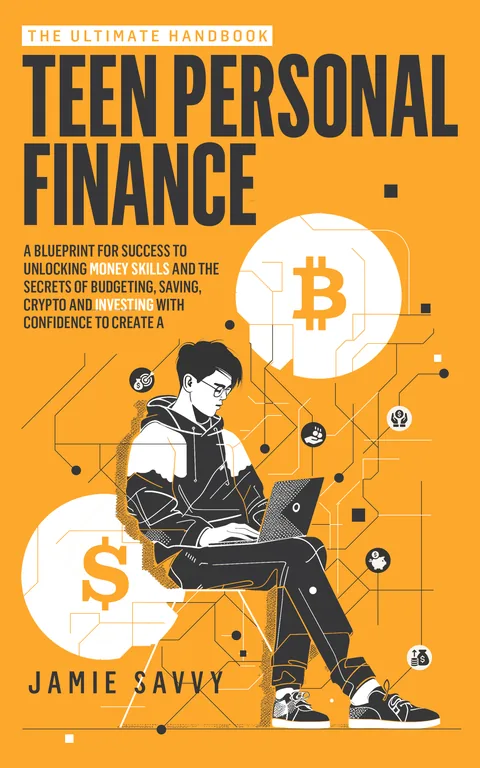
The Ultimate Handbook on Teen Personal Finance by Jamie Savvy is a plain-English guide for teens 13–17. It covers budgeting, saving, credit, investing, taxes, crypto basics, and spotting scams, with steps your teen can try this week. You don’t need a finance background to use it. Many parents read it alongside their teen, or hand it off and talk it through at dinner.
Why this book
- It starts with the words. The first chapter decodes jargon like APR, interest rates, and credit scores, so the rest makes sense.
- It’s practical. Your teen builds a real first budget, sets a savings goal, and learns what gross and net pay mean before the first paycheck.
- It’s honest about risk. Investing and crypto get a clear, no-hype explanation, and there’s a full section on protecting financial info and avoiding online scams.
- It’s short. Eight chapters, 152 pages in paperback, plus a glossary of money terms at the back.
What’s inside
- Decoding Financial Jargon Made Easy. APR, interest rates, credit scores, stocks vs. bonds, and taxes before a first job.
- Building Your First Budget. Goals, tracking spending, a step-by-step first budget, and fun money.
- Smart Saving Strategies. Why saving early matters, an emergency fund on a teen budget, and the No Spend challenge.
- Demystifying Credit and Debt. A first credit card, the true cost of debt, a student-loan primer, and hidden fees.
- First Steps into Investing. Compound interest, stock market basics, mutual funds and ETFs, and an honest look at crypto.
- Earning More: Beyond the Allowance. Part-time jobs, side hustles, freelancing online, and earning from hobbies.
- Digital Finance Tools and Online Safety. Online banking, payment apps, protecting financial info, and avoiding scams.
- The Future of Money. Fintech, blockchain basics, sustainable investing, and next steps.
Three ways to start the money conversation
You don’t need a big sit-down. Small, regular conversations work better.
- Show your teen a real receipt or bill and ask them to guess the total before you reveal it.
- Give them a small, fixed amount for something they already want, and let them manage it for a month.
- When they get a first paycheck, look at the pay stub together. Our tip on the first paycheck explained walks you through it.
More ideas: how to teach teens about money and budgeting for teenagers.
A gift that keeps paying off
It’s a thoughtful pick for a birthday, graduation, holiday, first job, or first bank account or debit card. The paperback is easy to wrap with Amazon’s gift options, and the Kindle edition can be sent as a gift straight from the Amazon page. It’s also included with Kindle Unlimited.
Questions parents ask
What age is the book for?
Teens ages 13 to 17. Younger teens often get the most out of reading it with a parent, and older teens heading toward a first job or college will find the chapters on taxes, credit, and student loans especially timely.
Do I need a finance background to help my teen?
No. The book explains money words in plain English, starting with a chapter on financial jargon, so you can read alongside your teen without being an expert.
Is it on Kindle Unlimited?
Yes. The Kindle edition is enrolled in Kindle Unlimited. You can also buy the ebook or the 152-page paperback on Amazon.
Does my teen need a Kindle device?
No. The free Kindle app works on phones, tablets, and computers, and Kindle for Web works in a browser.
Does it make a good gift?
It suits birthdays, graduations, holidays, a first job, or a first bank account or debit card. Use Amazon’s gift options for the paperback, or send the Kindle edition as a gift from the Amazon page.
Is this financial advice?
No. It’s an educational guide. It isn’t personalized financial, legal, or tax advice, so for big decisions talk with a licensed professional.
Can I read some of it first?
Try a free sample first.
Read a free sample from Chapter 2, “Building Your First Budget” (about a 6-minute read). If it clicks, the full book covers budgeting, saving, credit, investing, taxes, and scam-spotting for teens 13–17.